Restored WWII History in Color: Pearl Harbor 1941, The Day of Infamy
98,275 View

- Publish Date:
- September 27, 2026
- Category:
- Pearl Harbor
- Video License
- Standard License
- Imported From:
- Youtube
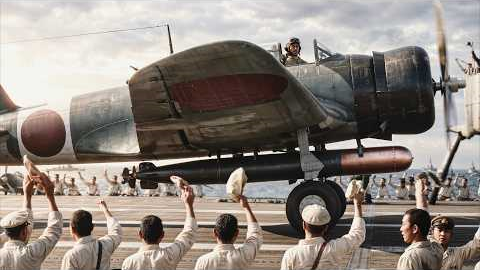
On Sunday morning, December 7, 1941, the course of modern history was fundamentally altered within a span of less than two hours. The aerial bombardment of Pearl Harbor was not an isolated bolt from the blue, but the culmination of a decade of geopolitical friction across the Pacific. In the early 1930s, the emergence of hardline militarism within Japan led to the unauthorized invasion of Manchuria and the subsequent walkout from the League of Nations. As Japan pursued its expansionist ambitions across China, highlighted by the 1937 sinking of the American gunboat USS Panay on the Yangtze River, relations with the United States deteriorated rapidly. The formalization of the Tripartite Pact with Germany and Italy in 1940, followed by the Japanese occupation of French Indochina, prompted President Franklin D. Roosevelt to impose sweeping economic sanctions, freezing Japanese assets and placing an embargo on crucial exports of scrap metal and petroleum.
Deprived of vital fuel reserves, the Imperial Japanese military devised an audacious plan to seize the resource-rich territories of Southeast Asia, recognizing that the United States Pacific Fleet stationed at Pearl Harbor posed the primary obstacle. Under the command of Admiral Isoroku Yamamoto, a massive strike force centered around six fleet carriers assembled in secrecy at Tankan Bay in the Kuril Islands. Sailing under absolute radio silence across the stormy northern reaches of the Pacific, the fleet navigated toward Oahu. Despite the interception of top-level diplomatic ciphers through the American decryption effort codenamed Magic, warnings failed to alert commanders in Hawaii to the impending assault.
At 07:55 AM, the first wave of Japanese dive-bombers and torpedo planes struck Oahu's military installations. Airfields at Hickam, Wheeler, Kaneohe, and Ford Island were systematically strafed and bombed, incinerating defensive aircraft parked wingtip-to-wingtip. Moments later, modified shallow-water torpedoes tore into Battleship Row. The USS Oklahoma capsized within twenty minutes, while a modified armor-piercing shell penetrated the forward powder magazines of the USS Arizona, triggering a catastrophic detonation that claimed 1,177 sailors and marines. The USS California, West Virginia, Nevada, and Utah sustained catastrophic damage as well. Restored and colorized historical footage reveals the true gravity of this pivotal morning, illustrating how a devastating tactical surprise unified an isolationist nation and commenced the brutal Pacific War.
To support our work and channel, join @
https://www.youtube.com/channel/UCTTqBgYdkmFogITlPDM0M4A/join
Thank you! 🙏🎖️
➤ More aircraft and history videos: https://www.youtube.com/@Dronescapes
➤ Join the channel: https://www.youtube.com/@Dronescapes/join
➤ THREADS: https://www.threads.net/@dronescapesvideos
➤ FB: https://www.facebook.com/Dronescapesvideos
➤ Reddit: https://www.reddit.com/user/Atellani/
➤ IG: https://www.instagram.com/dronescapesvideos
➤ BlueSky: https://bsky.app/profile/dronescapes.bsky.social
➤ Tumblr: https://www.tumblr.com/blog/dronescapesvideos
➤ X/Twitter: https://dronescapes.video/2p89vedj
VIDEO SERIES:
🎥U.S. AIRCRAFT VIDEOS: https://dronescapes.video/US
🎥AVIATION VIDEOS: https://dronescapes.video/aviation
🎥GERMAN AIRCRAFT VIDEOS: https://dronescapes.video/WWIIGermany
🎥BRITISH AIRCRAFT VIDEOS: https://dronescapes.video/British
🎥ERIC BROWN VIDEOS: https://dronescapes.video/EricBrown
🎥B-29 VIDEOS: https://dronescapes.video/B29
🎥VIETNAM AND KOREA: https://dronescapes.video/Vietnam
🎥TURBOJET VIDEOS: https://dronescapes.video/Turbojet
🎥SUPERSONIC VIDEOS: https://dronescapes.video/fastest
🎥EXTREME AIRCRAFT VIDEOS: https://dronescapes.video/Extreme
🎥STRANGE PLANES VIDEOS: https://dronescapes.video/Extreme
🎥COLD WAR ERA VIDEOS: https://dronescapes.video/ColdWar
🎥 WW2 VIDEOS: https://dronescapes.video/WW2
00:00:00 The Attack on Oahu: Destruction of the Pacific Fleet
00:02:55 Ten Years to War: Japan and the West in the 1930s
00:05:04 Expansion in Asia: Manchuria and the League of Nations
00:09:48 The Yangtze River Incident: Sinking of the USS Panay
00:14:36 The Tripartite Axis and Relocating the Fleet to Pearl Harbor
00:20:35 The Strategic Oil Embargo and Diplomatic Deadlock
00:25:34 Kido Butai Sails: Departure from Tankan Bay
00:30:51 Opana Radar Warning and the Morning of December 7
00:34:51 Airfields Under Fire: Hickam, Wheeler, and Ford Island
00:36:34 Slaughter on Battleship Row: Arizona and Oklahoma
00:42:19 Decoded Warnings and Secret Preparations
01:12:03 Eyewitness Accounts: Juzo Mori and Jackson Farris
#PearlHarbor #WWIIHistory #BattleshipRow