Jaws November 30th 2025 - Opening Season XL Swell
30,406 View

- Publish Date:
- December 2, 2025
- Category:
- Surfing
- Video License
- Standard License
- Imported From:
- Youtube
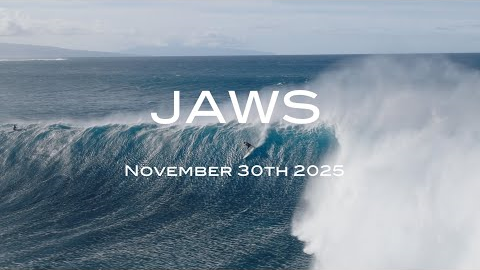
opening season XL swell at Jaws. Albee Layer getting the wave of the day. And potentially the wave of the winter.
What started off as a really slow day with not too many great waves ended with one of my favorite clips I've filmed ever. Albee paddled out around 3PM and it suddenly seemed to turn on. The wave he caught made my trip.
Super stoked to capture the moment, Slater Neborsky came in clutch handing me his drone controller while he filmed land angle and when my drone was swapping batteries.
Featuring
Albee Layer
Kai Paula
Torrey Meister
Kai Paula
Tyler Larronde
Kai Lenny
Sebastian Bianchi
Steve Roberson
Filmed by Slater Neborsky and Tucker Wooding
-----------------------------------
Barrier Builders: Tidal Sediment and Erosion Sculpting Coastal Sandbar Formations and Shoals
Understanding Sandbar Formations
Sandbar formations are fascinating natural structures that play a crucial role in shaping our coastal landscapes. These underwater ridges, composed primarily of sediment, are formed by the continuous action of tides and currents. As tidal waters move in and out, they transport and deposit sediment, gradually building up these barriers and shoals that define the coastal regions.
The Role of Tidal Forces
Tidal forces are the primary drivers behind the formation of sandbars. The ebb and flow of tides create dynamic water movements that redistribute sediment along the coastline. During high tide, water levels rise, allowing sediment to spread out, while low tide exposes these sediments, leading to their accumulation in specific areas. This cyclic process is essential in shaping the barriers and shoals that protect inland areas from the direct impact of ocean waves.
Sediment Distribution and Coastal Protection
Sediment plays a pivotal role in the development of sandbar formations. The size, type, and availability of sediment materials determine the stability and growth of these structures. Fine sands tend to form extensive, gentle sandbars, while coarser materials can lead to the creation of more resilient and pronounced barriers. These sandbars act as natural buffers, absorbing wave energy and reducing coastal erosion, thereby safeguarding coastal ecosystems and human settlements.
Erosion and its Impact on Sandbar Stability
Erosion is a natural process that influences the longevity and shape of sandbar formations. Strong wave action and storm events can erode these barriers, altering their structure and position. However, erosion also contributes to the continuous reshaping and dynamic nature of coastal environments. Understanding the balance between sediment deposition and erosion is key to managing and conserving these valuable coastal features.
Barriers and Shoals: Distinguishing Features
While often used interchangeably, barriers and shoals have distinct characteristics. Barriers are elongated landforms that run parallel to the coastline, providing significant protection from oceanic forces. Shoals, on the other hand, are elevated areas of shallow water that can extend offshore, posing navigation challenges but also contributing to coastal protection. Both barriers and shoals are integral components of the complex interplay between tidal movements, sediment supply, and coastal dynamics.
The Future of Sandbar Formations
As coastal areas face increasing pressures from human activities and climate change, understanding the formation and maintenance of sandbars becomes more critical. Sustainable coastal management practices are essential to preserve these natural barriers, ensuring they continue to provide protection and maintain the ecological balance. Future research and innovative conservation strategies will play a vital role in safeguarding sandbar formations for generations to come.