The GENIUS Who Raised Pearl Harbor's Sunken Battleships — When Japan Thought They Were Finished
382,391 View

- Publish Date:
- October 21, 2026
- Category:
- Pearl Harbor
- Video License
- Standard License
- Imported From:
- Youtube
October 25, 1944, a few minutes before four in the morning, in Surigao Strait. A Japanese battleship pushes north through the dark, and radar-aimed shells start landing on her. The American battleship that fired first had spent the start of the war on the bottom of Pearl Harbor. Burned, flooded, and full of dead men.
Japan had counted her as finished. So had a lot of Americans. The man who ran the salvage wrote that people around Pearl Harbor firmly believed none of the sunken ships would ever fight again.
One officer disagreed. Homer Wallin was not a fighting admiral. He was a naval constructor from Washburn, North Dakota, a man trained to understand why a ship floats and where its steel is strong and where it is weak. Where others saw lost battleships, he saw steel boxes full of water instead of air, sitting in about forty feet of water, a few minutes from a shipyard the Japanese had barely touched.
And the shallow harbor that made the attack possible was the same thing that made the wrecks reachable. Japan had to fit its torpedoes with wooden fins just so they would not stick in the mud. Caught at sea, those battleships would have gone down for good.
What came out of that black, oily water was not luck and it was not a miracle. It was a method, and a brutal one. Divers working blind by touch through flooded passageways, through wreckage, unexploded bombs and the bodies of men they knew, with poison gas building up in the sealed compartments.
What we go through:
Battleship Row on the afternoon of December 7, 1941, ship by ship How one officer's counter-flooding kept West Virginia upright Why Wallin took the antiaircraft guns off the wrecks before raising anything Triage: easy jobs first, hard ones later, some never Hydrogen sulfide on Nevada, the two men it killed, and the color-changing paper that followed Raising Nevada, then California behind wooden walls built on her deck The timber and concrete patches that brought West Virginia off the bottom The three sailors found in her storeroom, and the calendar on the wall Why "the attack accomplished nothing" is only half true Righting Oklahoma with 21 winches, 40-foot A-frames and about 42 miles of cable Rebuilt on the West Coast with radar, new guns and torpedo bulges too wide for Panama The night battle at Surigao Strait and the last battleship-versus-battleship salvo What happened to every one of them after the war
Said plainly so nobody has to write in: Wallin did not win the war, and the Pearl Harbor battleships did only part of the damage at Surigao Strait. American torpedoes had already gutted Nishimura's force, Oldendorf heavily outnumbered him, and the radar came from shipyards and an industry Japan could not match. And six of eight battleships did come back, but not until 1943 and 1944. For all of 1942 they were out of the war, which was exactly what Japan wanted.
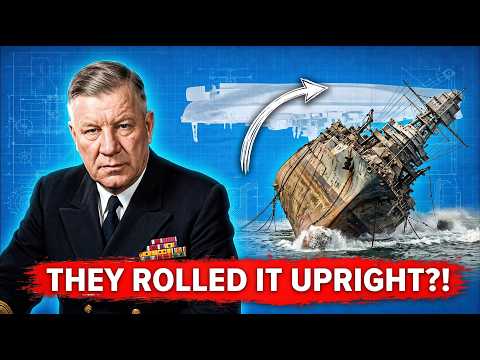
There is a reversal at the end too. The biggest job of the whole salvage, Oklahoma, was rolled upright, floated, and never fired another shot. And the two ships Wallin chose not to raise, Arizona and Utah, are the only ones you can still visit today.
If you want to see the whole story the way he saw it, watch it through to Surigao Strait. The same hull, the same name, some of the same steel those men had died inside.
Tell me in the comments if anyone in your family served on one of these ships or worked at Pearl Harbor. And tell me this: before tonight, did you know West Virginia was sitting in Tokyo Bay on the day Japan surrendered?